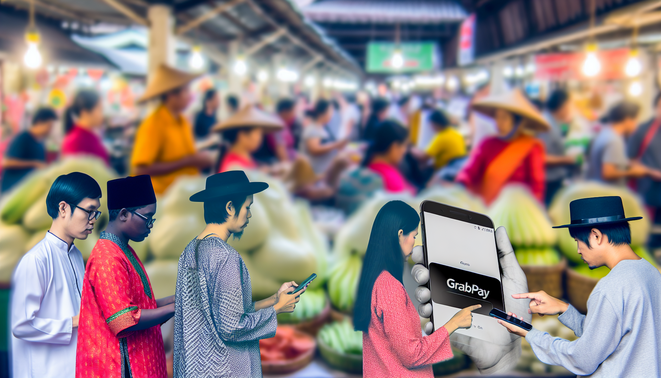
Introduction to GrabPay
Imagine a world where your payment options are simplified, and you never need to carry cash again. This is the promise of GrabPay, a digital wallet that is transforming the payment landscape in Southeast Asia. As a seamless and efficient payment solution, GrabPay allows users to transfer money and pay for rides and online shopping with unparalleled convenience. In a region where digital payment adoption is on the rise, GrabPay is enhancing security and efficiency for a diverse population. Its user-friendly interface and seamless integration with other Grab services make it an essential tool for many users today.
To learn more about QR codes, which complement digital transactions like GrabPay, check out our guide on how to create a QR code for free.
Benefits of Using GrabPay
Using GrabPay offers numerous benefits for both users and merchants alike. The convenience of making payments quickly and effortlessly enhances the overall shopping experience. By pairing their GrabPay account with various services, users enjoy seamless transactions across different platforms.
Security is another critical advantage. GrabPay employs advanced measures, including encryption and tokenization, ensuring that user data and financial information remain protected from potential threats.
Moreover, GrabPay integrates smoothly with everyday services such as ride-hailing and food deliveries, making it a versatile payment option. Overall, GrabPay stands out as an excellent choice for anyone looking for a reliable payment solution. For insights on digital payment evolution, explore our article on UPI and the future of payments.
GrabPay Integration with Local Businesses
GrabPay’s integration with local businesses greatly enhances customer experiences while fostering economic growth in Southeast Asia. By partnering with local vendors, GrabPay simplifies transactions and encourages the adoption of digital payments.
Local businesses benefit significantly from increased customer foot traffic as customers appreciate the convenience of seamless payments. This relationship nurtures a vibrant economy and supports local entrepreneurs while providing valuable services to users.
Additionally, GrabPay’s collaboration extends beyond mere transactions and includes promotional campaigns and loyalty programs, driving customer engagement and satisfaction. Businesses that embrace tech solutions like GrabPay often see improved operational efficiency.
For more insights on effectively using payment solutions, check out our post on creating QR codes for free.
Success Stories
GrabPay has positively transformed payment processes across various industries, benefiting both businesses and consumers. Users enjoy fast, secure transactions, while businesses experience heightened customer engagement.
Restaurants utilizing GrabPay report a remarkable 30% increase in diners choosing digital payment options, which streamlines service and enhances overall customer satisfaction. Retailers have also seen positive impacts, many experiencing significant boosts in sales during promotional periods thanks to GrabPay’s user-friendly platform.
Moreover, small businesses have successfully implemented QR code payment methods. This not only reduces wait times but also increases transaction transparency. A local café case study revealed that customers preferred GrabPay’s contactless payment system, noting its safety and convenience.
For more insights on how QR codes and digital payments are changing businesses, check out our guide on How to Create a QR Code for Free.
Key Takeaways
- GrabPay is revolutionizing payments in Southeast Asia by promoting cashless transactions.
- Users appreciate its convenience and the integration of various financial services into one platform.
- The digital wallet enhances financial inclusion for many unbanked individuals.
- Businesses that embrace GrabPay can stay competitive and efficient in a digital landscape.
FAQ about GrabPay
GrabPay is a popular mobile payment solution in Southeast Asia, and here are some frequently asked questions about its functionalities:
- What is GrabPay? GrabPay is an e-wallet developed by Grab, allowing users to make cashless transactions easily.
- How do I top up my GrabPay balance? Users can top up their balance through bank transfers, credit/debit cards, or designated outlets.
- Is GrabPay widely accepted? Yes, it is accepted by numerous merchants across Southeast Asia, including restaurants, shops, and online platforms.
- Can I use GrabPay for online shopping? Absolutely! GrabPay can be used for in-app purchases and on many e-commerce websites.
- Are there fees for using GrabPay? While many transactions are free, certain services may incur fees depending on the merchant or transaction type.
For more insights into cashless transactions and QR codes, check out our step-by-step QR code guide.
Conclusion
GrabPay has the potential to significantly transform the future of payment systems. With its user-friendly interface and extensive features, it offers numerous opportunities for consumers and businesses alike.
For consumers, GrabPay simplifies transactions, allowing for convenient and efficient payments. For businesses, it opens up new revenue streams and enhances customer engagement through innovative payment solutions.
As digital wallets continue to grow in popularity, integrating platforms like GrabPay is essential for increasing customer loyalty and retention in today’s competitive marketplace.
For further insights into modern payment systems, check our guide on Exploring UPI: The Future of Payments in India.
Categories: Digital Payments, Financial Technology, Mobile Wallets
Featured Image: A hyper-realistic photo of a smartphone displaying the GrabPay app with shopping items and cafe scenes in the background, illustrating modern digital transactions.
Sections Images List: Image of a smartphone showing a QR code, images of local businesses using GrabPay, graphics displaying the benefits of digital wallets, and screenshots of the GrabPay interface in use.
For more details on creating your very own QR codes, create your first dynamic QR now.
Leave a Reply